Tuesday, 31 January 2017

Title credits


At the end of our trailer, we have to conclude with our own title credits which include things such as the editor,
 director, author, musing, casting, etc. Above is a short clip of our title credits that we aim to incorporate in the 
final part of our trailer. Title credits are important as they are essentially the punctuation mark to the film. The 
credits also give attention to everyone who worked on the film; when watching films, audiences often stay to 
watch the credits and the end of the film... this can often just be to find out who the actors but also just a general
 way of allowing the audience to fully take in the impact and message of the film/trailer.

The background and font of these credits have immediate connotations of  a horror with the dark, dull colors
 and the faded edges - adding emphasis to the text in the centre. They partially portray an eerie and threatening
 atmosphere which is an important illusion to have in a horror. The black font on a white background is extremely
prominent; the colours completely juxtapose one another... with black having connotations of fear, horror and
power - in comparison white portrays the safety, security and purity of the film. We are also able to relate these
colour connotations to our characters which is an effective way of creating representations.

The name of the film is written in a different font as it is the most important title. The spaced out letters
make it much more prominent on the white background; with the intention that the audience will identify the
title and remember it. Also, with relation to the font, the size of the title headings are much larger and clearer
than the subtitles... 'Directed by' and 'Edited by'. And this is important again as it is about giving credit to the
 actors of the film. In the majority of films, the title credits (typically placed at the end of a film/trailer) tend to
be a huge Unique Selling Point for them as if there film has a successful, well-known actor in, it is likely that
 they will be more attracted and engaged by the film. For example, for anyone that has seen Titanic, starring
Leonardo DiCaprio; they would know how hugely successful the film was and they would know that DiCaprio is
such a successful actor that they would follow him and any films that he features in. And for this reason,
displaying the actor names in the credits allow the audiences to know off the actor and as a result want to watch
the film.
Despite these specific credits not displaying the actors names, this is something further that we aim to
incorporate in our film; however another important USP would be displaying the director of the film. This is
 another thing that is prevalent in films and trailers as if audiences were to know who directed a film, and
alike with the actors; if they had been successful previously... it is likely that they would continue to create
successful films and therefore would want to watch there films. Overall, incorporating credits allows audiences
 to recognise and remember the people involved in the film.


Displaying these kind of titles are also important as typically unless
 they are the director or are acting in the film... they do not get noticed
 or praised by audiences. As shown on the left and in our clip above,
 the credits that are included here are for, the Director of Photography,
Production Designer, Costume Designer, Casting and Music. All of which
audiences dont really think about when watching a film or trailer - and for
this reason it is important that they are included at any stage of the
film/trailer, as it is often that the part they play in the creation and build-up
to the film/trailer is just more difficult or important as it is for the
actors/director.

Thursday, 26 January 2017

Location images (google earth)

Image result for abandoned houses surreyImage result for abandoned houses surreywhen deciphering which location for filming would be most effective, realistic,authentic and best for our movie, we had to undergo risk assessments of any preliminary areas we planned to use.As we commenced our risk assessments some of the abandoned urban and forestry areas involved elements of danger, for example an abandoned residential area in Chertsey, and also in Reigate had tools, glass, and indications that there had been prior fires, as well as also news articles we had read of needles and drug usage taking place in abandoned buildings like the ones we investigated to film in. Because of this we thought it may be easier to cleverly film just the exterior of the house for our movie, and use mise en scene and props to make the interior of a normal house seem abandoned and eerie, or, alternatively we had a preliminary idea to completely change our initial ideas and allow the filming to take place in a warm, homely environment, like my grandmas house which would interlink a personal attachment with the film- which would then allow us to juxtapose our themes of dark horror and the gothic genre with real life environments- hence- increasing the realistic nature and hyper reality of the film...further enforced if we used day to day commercial cameras rather than the latest media and cinematic technology. The google map images of the location crossed out and the location ticked exhibits the two locations in comparison, with the ticked location being a lot more residential, homely and safe very easy to access as it is my nans house who lives nearby. this also means that travelling to this setting for the filming of our trailer will be easy to do, and not act as a barrier for the filming like our location did last year at AS level.

Anamatic - time lapse


Costume analysis MES

Costume analysis - MES

The aim for our elderly character is to make them appear to be quite innocent; primarily with the representation of what they're wearing. Stereo typically, the idea of an elderly character in a film seems quite unusual; however that is the main idea with having an abnormal character appearance that would make the film more effective and original. The specific colouring of the characters clothing is basic yet co-ordinates and stands out with the background and setting that she is in.

The white netted scar is prominent against the women's black clothing and the netting is effective in covering her face, partially hiding her identity. Stereo-typically, this is a piece of clothing that an elderly women would be shown to wear... therefore making the character more realistic and natural rather than being dressed in something that would not be expected by the audience.

The all black outfit may just be noticed as being her own nightwear and therefore does not need to have any meaning to it. However the colour black has many negative connotations such as death, mystery and power. This is conventional of a horror and is often something that we expect to appear to make us have negative opinions towards the character. The white colour of the scarf, however, represents innocence and purity... both immediate stereotypes that we would think of when seeing an elderly women.

The clothing of the characters is most effective in creating a representation in film, as it essentially suggests a lot about the character (wealth and status) rather than just stereotyping against them because of there age or gender. When portraying a character, it is vital that there outfits fit them well and gives off the connotations that we intend them to (being innocence and vulnerability of both the young girl and women). The costumes that we have chosen create the kind of innocent and vulnerable look and therefore makes the audience believe that this is what they are like. This will be effective as it follows further through the film as it would essentially become more of a surprise and unexpected turn if the characters were to change the way the audience would've expected them to act.

For the young girl, the aim again is to make her look innocent and vulnerable... in a way that you would expect a child to be at night and in the situation that she finds herself in. To be able to create this representation, we chose the stereotypical clothing that you would assume a child to be wearing at night - pyjamas. In the trailer, we have a close up shot of the girls feet as she steps out of the bed and this shot specifically shows her as she steps into her bunny, childish sleepers. This again creates a realistic situation of which she would do normally when she gets out of bed; though making all of this seem like a normal situation with the way she is dressed and the location (being in her bedroom), it will eventually become more of a shock when the situation becomes bad with the intention to frighten the audience.

Monday, 23 January 2017

Soundtrack Research

Soundtrack Research

SOUND EFFECTS

One of our initial idea's that we had was to include sound tracks/effects of young children singing. The reason for this idea was firstly because of the age of the young girl in our film... through using these sound affects, it would be somewhat relatable to her. However, the idea also came about as it is quite an eerie sound and if it were to be non-diegetic - a sound where we can't see whats producing it - then it would create more tension as you stereo-typically wouldn't expect to see a young child or hear a young child in the situations that occur in horror films. This would potentially engage the audience more as said, it is quite an unexpected sound. The first idea was to use a child singing a childish song as shown in the video link on the left. This song is known to be sung by children at a young age, and gives the representation of quite an innocent child, thus using this would be quite frightening and to use it in a horror scene, situation it would be much more daunting for the audience.


In our trailer, there will be a stage where the young girl screams and to get the most effective and frightening scream... we have decided to use a non-diegetic sound as it is more difficult for the young girl acting in our trailer to do it. The two links above are relatively similar and are just short clips of a girls scream. We will ensure that the clip we end up using is not copyrighted, and will then convert it into an mp3 document, and then upload onto our trailer; this can be easily done on the Adobe Software that we are using, which will allow us to adjust and move around the sound into the specific place where we want it.


These next two links are sound effects of a creaking door; this is a sound that is quite difficult to capture on the camera as it doesn't tend to be as loud as we particularly want it. Despite the sound being high quality on the camera, it is only really for clear, reasonably pitched sounds. Alike the scream sound affect, we will make our final decision as to what we will use and will use the tools on our software to cut and adjust the sound to make it fit perfectly with the action being made. 

Equipment

Equipment

 The image on the right is of the tripod; this is used to support the camera when filming to get a steady shot and also a smooth rotation by turning the handle. This piece of equipment was supplied to us by the school which we are allowed to take out to use for our filming. Benefits of using this is primarily to get a steady shot as it is difficult filming free hand unless you want an unsteady hand-held effect. The tripod also allows us to film at different levels; as shown in the image, we are able to adjust the height of the shot between three different levels. This can be effective in creating shots from different levels but also different angles where we are able to adjust the pointing of the camera using the handle. We are able to adjust the camera position left or right and up or down, creating a high or low angle shot if wanted. The tripod is easy to use allowing us to successfully create different shots using the different levels and adjustments.

Image result for Nikon cool-pix L840To film our trailer we are using a Nikon cool-pix L840 camera which is easy to use and has many different features.We are using this to film our trailer mainly because of the high quality and to be able to film at a high resolution. The main thing that we needed to consider was the storage as we found out from last year filming our opening two minutes, we need to film each clip multiple times to get the best possible shot and angle. Despite the majority of the sound in our trailer going to be added, we will still be using some of natural, diegetic sounds from the original filming which will be useful as the sound on the Nikon Camera is of high quality.

Friday, 13 January 2017

Research and Planning Feedback

You've acted on feedback well here Hollie - now make sure your journey's docucmentation is in a chronological order.  Evidence your video diaries, time-management and annotated storyboard to complete this stage of your G324 portfolio,

Thursday, 5 January 2017

Diary of filming-day 1

 This was our first day filming, where we aimed to get a collection of short clips to be able to begin creating the trailer. Unlike last year, we are able to film over a longer period of time; the main issue last year was we were creating an opening two minutes so everything had to follow on in the same location, same time of day and also our main character Robyn had to look the same. This was the reason for all filming in a short space of time as Robyn had her makeup done specifically for it and it would be difficult to replicate the look and the costume.

The majority of this day's filming was in the same two places, the first being a bedroom where we captured clips of our young female character, and also the bathroom where we had planned to film specific clips. The first image here is off Jasmine, who assisted us with the filming. In the picture, she was just practicing and adjusting the tripod to have it in the position which we wanted for the first shot. As evident in the next picture also, we had adjusted the tripod to ensure that it was the correct height. The majority of the lighting here was from a small lamp in the bedroom as we were filming in the evening which meant there was no potential use of natural lighting. During this process of filming, we done multiple takings of each clip to ensure that we had more than just one to choose from, if there was to be any mistakes or slight errors during the clip.

To film, we used a Nikon camera; this was the same camera that we ended up using last year of filming. We were able to securely fit the camera onto the tripod allowing us to take steady shots, also it is simple to use. The quality of the camera has 16 megapixels which meant it was very good quality and picked up the colour and adapted to the lighting very well,


With filming at this time of year, it gets dark extremely early which would initially be a struggle for us to be able to get enough filmed in natural lighting. However this is not going to be such an issue as we are filming a horror, which is not typically filmed in daylight. During our filming, we used a lot of low-key lighting, so for example small lamps which gave us enough light to film at a good quality; but enough to create the more shadowy effect. This lighting is primarily effective and conventional in horror films. With some of our shots in the bedroom, there is use of back lighting, which gain did involve using the small side-lamp, however it was behind the character creating a partial glowing effect on the character in front.

The image here is of our antagonist who is an elderly women. The shot here was used during our filming in the bathroom, as shown in the image, the idea was to have her behind our protagonist. The lighting in this shot was very dim and in this image, it was only the flash on the camera that lit up the area. The colours of her clothing are significant, firstly coordinating with the colours around; and secondly, the colour white itself has many connotations such as innocence and purity... and in contrast the colour black has many negative connotations such as evil, death and fear. These connotations giving a clear representation of her character.

Tuesday, 3 January 2017

Questionaire feedback

Questionnaire Results


WHICH IS YOUR FAVOURITE GENRE OF HORROR?

ACTION HORROR
GOTHIC HORROR
PSYCHOLOGICAL HORROR
MAINSTREAM HORROR


WHICH KIND OF CAMERA MOVEMENT DO YOU THINK WOULD BE MOST EFFECTIVE IN A HORROR TRAILER?

FAST PACED
SLOW PACED


WHICH KIND OF SOUND WOULD YOU FIND THE CREEPIEST IN A HORROR TRAILER?

THE SOUND OF YOUNG CHILDREN SINGING
FAST-PACE HEAVY BREATHING/PULSE
A HIGH PITCH SCREAM


IF YOU HAD TO COMBINE ONE OF THESE GENRES WITH A HORROR WHICH ONE WOULD IT BE?

ACTION
DRAMA
SCIENCE-FICTION
CRIME


IN WHICH SITUATION WOULD YOU EXPECT A HORROR MOVIE TO BE THE SCARIEST?

IN THE DAY TIME
AT NIGHT
IN A HOUSE
IN A DERELICT/ABANDONED AREA


WHICH CHARACTER WOULD TRIGGER MORE OF A FRIGHT FOR YOU AS THE ANTAGONIST?

YOUNG GRUDGE LIKE GIRL
OLD WOMEN


Questionnaire


This is our questionnaire which we will use to gain feedback on our initial ideas. We will begin by giving this questionnaire to people of the particular age group - being 15+ as this is the age certificate for our trailer. Once the questionnaires have been completed we will make an overall decision as to what will most appeal to our target audience.


Question 1
Our first question is based around the main character. The two options are a 'Young grudge like girl' and an 'Old women'. We were initially influence by these two characters from seeing them in other films such as The Grudge which features a young girl and also The Visit who features an old women. Firstly, the idea of having a young child as the main character is likely to be more appealing to the audience and would have more success in scaring them.The typical expectations of a young child are them being quite innocent and vulnerable however in the case of a horror film, these stereotypes are totally subverted and therefore are unexpected by the audience. The second idea of using an old women as the antagonist is effective as again, typical expectations are that they are quite vulnerable and kind and generous people; in the case of a horror film, however, there personalities are flipped around and they actually become quite an eerie character to the audience. By asking this question, we will make the decision on which character to use as our antagonist and which one will have more success in scaring the audience.

Question 2
The second question is a kind of when and where question, and this is important to think about in film. The 4 ideas we had were; in the daytime, at night, in a house or in an abandoned/derelict area. All primal locations and times that we have seen and been influenced by in other horror films. As a result of actually asking this question, we may actually use all 4 location/times however we feel it is important to ask the question so we know where to base most of the trailer.

Question 3
The third question involves the conventions that we aim to include in our trailer. In many trailers, there is usually a combined genre; for example, the film 'Saw' which is a horror, thriller. This is an important thing to consider when thinking about conventions that we are going to use. For example, we may use a car as a prop (action convention) and somehow turn that into a prop used for murder (horror convention), which involves the horror aspect.

Question 4
This question, again, involves the genre of our trailer. There are many different genres of horror being: Action, Gothic, Psychological and Mainstream. For this question, we have given examples of films of the specific genre to ensure that the people answering have an idea of which each genre actually is. Once we have got an overall percentage for this question, we will be able to focus on the specific conventions of the horror genre.

Question 5
This next question is regarding the diegetic/non diegetic sounds which are a part of mis-en-scene; a key area to focus on in film. The three different options are, again, sounds that we have been influenced by through other films. The first sound we were considering is of young children children singing. The reason for this choice of sound is because, firstly we are considering having a child as our antagonist/main character and therefore felt like it would make sense and relate for this sound to be used. Another reason is that the sound is quite eerie and therefore may be likely to scare the audience; and for this reason we are asking the question. The second option is fast paced, heavy breathing/pulse which could be significant in creating a kind of panicking/tense atmosphere for the audience. The third is a high pitch scream, which is the typical sound you hear from someone who may have been hurt or are scared. All of these sounds that we are considering are most likely to be non-diegetic for the reason that you wont know who/where it is coming from and would therefore be more intense for the audience.

Question 6
The last question we are asking is based on the camera and the pace at which we film. In many trailers, the camera movement is fast-paced for the reason that it is a trailer, and trailers do consist of short clips which tend to be quite fast in switching between each one. However it can also be effective using slow-paced shots, as it is more intense and entices the audience much more as they aren't sure what to expect.


Questionnaire

This is our questionnaire which we will use to gain feedback on our initial ideas. We will begin by giving this questionnaire to people of the particular age group - being 15+ as this is the age certificate for our trailer. Once the questionnaires have been completed we will make an overall decision as to what will most appeal to our target audience.


Question 1
Our first question is based around the main character. The two options are a 'Young grudge like girl' and an 'Old women'. We were initially influence by these two characters from seeing them in other films such as The Grudge which features a young girl and also The Visit who features an old women. Firstly, the idea of having a young child as the main character is likely to be more appealing to the audience and would have more success in scaring them.The typical expectations of a young child are them being quite innocent and vulnerable however in the case of a horror film, these stereotypes are totally subverted and therefore are unexpected by the audience. The second idea of using an old women as the antagonist is effective as again, typical expectations are that they are quite vulnerable and kind and generous people; in the case of a horror film, however, there personalities are flipped around and they actually become quite an eerie character to the audience. By asking this question, we will make the decision on which character to use as our antagonist and which one will have more success in scaring the audience.

Question 2
The second question is a kind of when and where question, and this is important to think about in film. The 4 ideas we had were; in the daytime, at night, in a house or in an abandoned/derelict area. All primal locations and times that we have seen and been influenced by in other horror films. As a result of actually asking this question, we may actually use all 4 location/times however we feel it is important to ask the question so we know where to base most of the trailer.

Question 3
The third question involves the conventions that we aim to include in our trailer. In many trailers, there is usually a combined genre; for example, the film 'Saw' which is a horror, thriller. This is an important thing to consider when thinking about conventions that we are going to use. For example, we may use a car as a prop (action convention) and somehow turn that into a prop used for murder (horror convention), which involves the horror aspect.

Question 4
This question, again, involves the genre of our trailer. There are many different genres of horror being: Action, Gothic, Psychological and Mainstream. For this question, we have given examples of films of the specific genre to ensure that the people answering have an idea of which each genre actually is. Once we have got an overall percentage for this question, we will be able to focus on the specific conventions of the horror genre.

Question 5
This next question is regarding the diegetic/non diegetic sounds which are a part of mis-en-scene; a key area to focus on in film. The three different options are, again, sounds that we have been influenced by through other films. The first sound we were considering is of young children children singing. The reason for this choice of sound is because, firstly we are considering having a child as our antagonist/main character and therefore felt like it would make sense and relate for this sound to be used. Another reason is that the sound is quite eerie and therefore may be likely to scare the audience; and for this reason we are asking the question. The second option is fast paced, heavy breathing/pulse which could be significant in creating a kind of panicking/tense atmosphere for the audience. The third is a high pitch scream, which is the typical sound you hear from someone who may have been hurt or are scared. All of these sounds that we are considering are most likely to be non-diegetic for the reason that you wont know who/where it is coming from and would therefore be more intense for the audience.

Question 6
The last question we are asking is based on the camera and the pace at which we film. In many trailers, the camera movement is fast-paced for the reason that it is a trailer, and trailers do consist of short clips which tend to be quite fast in switching between each one. However it can also be effective using slow-paced shots, as it is more intense and entices the audience much more as they aren't sure what to expect.

Editing software and camera usage

Our primary movie editing software for our movie opening is Adobe Premier Elements. This is the most advanced school software that we can edit our movie on, and as well as this it includes many more features than other programmes like Windows Movie Maker. The software allows us to manipulate our movie clips as well as sound and transitions and effects to allow us to produce the most effective movie opening we can.

Premier Elements enables us to have a scene-line which we can use to place clips in certain orders...and as well as this we can easily cut clips from the scene-line or even just cut out irrelevant points such as the very first few seconds of a clip. The software provides transitions and effects like fade to black, dissolve,3D and curtains however with a professional approach, we are only going to be using the fades- especially for our film credits.

Premier elements is the closest we are able to be provided with to a professional movie industry editing programme. For this reason, this particular software will enable us to create the most successful opening. We have considered that alongside Premier Elements we could experiment with manipulating imagery in Photoshop and even making final adjustments to our movie in its final upload to you-tube with the you tube editing tools to change contrast and any subtle filters.

our previous experimentation and experience with Premier Elements came into play with our 'what are you doing here' preliminary task where we experimented with the sound levels, addition of sound effects, cut clip beginnings and endings that were invalid, changed order and timing of shots. We additionally experimented with Premier Elements when we created our preliminary task with match on action and shot reverse shots and had to accurately edit the timing of shots here to make our clips seem realistic and structured.

We are going to be filming our movie opening two minutes using cheifely the Nikon Cool-pix L840, however we will be using the Go-Pro HERO 4 alongside this. We are using the Nikon to film our still shots most importantly because of its high quality and ability to record at high resolution and playback. The Nikon camera we are using also has an extortionate storage memory, meaning we can repetitively shoot our different scenes and action that goes on to get the best possible cuts and camera angles. The sound clarity is high quality on this particular camera also- however we still wish to include some of the sound aspects of our movie by pre recording sound through Foley. 

The Go-Pro HERO 4 is going to be used by us to capture the more active scenes of the movie opening, as well as being used to capture action from different angles. We will also be taking full advantage of this particular camera because it is best when used for sporting/ high paced action and scenes so we are going to use a hired chest strap and head strap to strap onto our male actor when he is running from the crime scene to receive point of view shots and canted angle and handheld appearing shots creating an uneasy feeling. 

Alongside these cameras we are using a school provided tripod which will keep the Nikon camera sturdy and supported. We will only be using this tripod when using the Nikon camera because the HERO 4 is going to be used to film more uneasy shots taking on traits from self filmed movies like the Blair witch project. 


Filming schedule- day 1

Filming Schedule - 1
WHERE?

Our first filming day will be at a house in Ashtead. This is where the majority of our filming will take place as it is an idea that we thing will be effective and is conventional of a horror. The house setting creates quite a comforting yet eerie atmosphere following the kind of situation we are creating. We will be filming in a bedroom; a typical place for a young girl to be in the evening, and also the bathroom.


TIMINGS?

We aim to start setting up the tripod and camera at around 6:30pm; along with getting the characters ready with what they're wearing, etc. Once we've got everything prepared and the characters are ready, we plan to begin the initial filming at 7:00pm. The intention is to get at least 2 recordings of each clip to ensure that we have a choice between the 2 (or more) if there was to be an error. Roughly after an hour of doing our first filming, we intend to spend around 30 minutes to go through the clips, checking the lighting, sound and the acting, specifically to ensure that everything is reasonable. Once having completed this, if there are any specific clips that need re-filming, we will spend another hour making sure that the clips are ready to edit.

The actual reason for beginning at this time is due to the fact that we do not require any natural lighting; and the situation we are filming in is of a young girl in bed asleep, clearly meaning it would need to be dark outside and we would be using low-key lighting.

Practice titles- initial attempt 1


Practice Titles - (using Adobe Premiere Elements)


These are our practice titles which are currently quite basic; this was because it was only a practice to test the potential transitions that we may use and also the different fonts. As shown in the video, there are 4 different titles, three of which are potential institution names and another one which we are considering as our title; alongside other title ideas. To complete this practice, we used the Adobe Premiere Elements 10 software. This is the software we are currently using to edit our trailer and we also used it last year to complete our opening 2 minutes to a film. There are multiple transitions that we have the option to use for our trailer, all of which are effective and are somewhat conventional/fit in well with the horror genre that we are pursuing. 

Green screen potential in our movie

when initially planning our movie trailer we took into consideration the concept of using a green screen so that we could experiment with CGI and incorporate scenes that were perhaps impossible to film. this article was particularly useful with our research into green screening;

* we thought we could potentially use a green screen if we needed to give audiences watching the trailer abit of context behind the films trailer, for example if there was absence of much dialogue or text, then it may not be explained why the old woman in our trailer is ghostly/dead or why we wanted her to wear a gas mask whereas if we chose to green screen a graveyard background or blitz scene connoting the woman came from the post ww2 era it would give away more of what the plot revolves around*

+/- we did however look at the positives and negatives behind green screen usage and thought that possibly its CGI and visuals may not be necessary for a film we wanted to make seem as realistic and relatable to everyday life as possible. Also it may ruin enigmas, cliffhangers and questions people would have about the film in its entirety, so thought instead we could potentially advertise special effects and CGI on the film poster or magazine cover rather than revealing too much in the trailer itself. 


How to Use a Green Screen: A Beginner’s Guide to Chroma Key Photography


howtouseagreenscreenChroma key photography, also known as green screen photography, is a process that allows you to replace a solid colored background with a background of your choice. This technique has been used in the film industry for years but it is now becoming very popular with photographers as well.
Using a green screen, you can capture amazing pictures that are simply not possible using conventional photo composition techniques. It also means you can spend a lot less money on expensive backgrounds for portrait photography. In many ways, green screen photography allows you to have fun taking pictures again while expanding your photography opportunities immensely. Green Screen Photography teaches you how to implement green screen photography techniques into your current photography skill set.
What You Need to Get Started
Believe it or not, green screen photography is extremely easy to do once you understand the basics. In terms of equipment, you don’t need very much. Your digital camera (hopefully you already have one of these), a computer, chroma key photography software, and a green screen background.
There are many programs that allow you to swap out your green screen with the background of your choice. Photoshop has a chroma key filter that will automatically remove the green from your image but there are also a variety of custom-made programs that are designed specifically for chroma key photography. If you would like to learn how to use Photoshop for editing your green screen photographs, check out thePhotoshop Made Easy course..

Lighting
The single most important aspect to successful green screen photography is lighting. You need uniform lighting across the entire background to quickly remove the green color from your photographs during post production.
To create the optimal lighting conditions, you practically need to have professional quality studio lighting available. Many photographers have successfully performed green screen techniques without high-end lighting systems, but processing these images with Photoshop or another chroma key program takes much longer.
Evenly lighting the background requires at least two lights. These lights should be set up as sidelights pointing toward the green screen from approximately a 45° angle. Typically, these lights should be about 6 feet away from the green screen although the material your green screen background is made of will determine the exact distance your light should be.

Extra research on the conventions of old age in horror movies

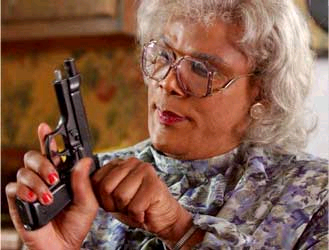
Movie-goers chuckle every time Tyler Perry's character, Madea, pulls a handgun from her purse.CONTEXT BEHIND AGEISM; ageism is referred to often as a 'social disease' fed into by stereotyping. Some believe ageism can be stereotyped in just the same ways as racism and sexism and hence, ageing actors and elderly characters create deep personas and relatable figures in the film industry. In politically correct terms, old age people are to be referred to as seniors, making them seem rather superior in contrast to the frail, weak and sometimes even feared and isolated stereotypes cinematic pieces flaunt. Often real life representations of age differentiate to stereotypes that come across in films, hence defeating the idea of hyper reality suggested by media theorist jean Baudrillard. In the real world exempt from the film industry one of the main categorization for the elderly is seeing them as helpless victims, sweet and vulnerable which is reinforced in these recent news headlines i found 'elderly woman scammed of life savings' 'police hunt driver that knocked down elderly couple' 'elderly man missing in..' reinforcing how the elderly are victimized and perhaps seen as inferior and incapable.

in the film industry the elderly are attributed a demeaning set of characteristics: senile, sickly, unattractive, greedy, cranky, and child-like. Particularly also- the elderly play pinnacle roles in sit coms and play an almost clown like roles. However, in our film trailer we will be completely contrasting some of the most generic cliche elderly stereotypes and using our ageing antagonist as the main point of horror and fear in the film.


THEORIST RESEARCH:  Elizabeth Dozois
Research suggests that most people (including older adults) do not understand the course of typical aging and grossly overestimate its impact. For example, one study found that 90 percent of elderly respondents indicated that the likelihood of them becoming senile was very strong. However, estimates indicate that dementia-related illnesses only affects about 10 percent of people over age 65…
We researched into Dozois' theories as it assisted in using the general public's views and stereotypes to craft our antagonist cleverly as someone who could be related to, and seem realistic to audiences as realistic horror is what creates fear and what truly scares movie goers. this idea of elderly people expecting to go 'senile' gave us a basis for the elderly woman's persona in our film who we wanted to have an aura of madness and not quite mortal saneness. this enabled us to craft the elderly character around real world stereotypes of insanity so we could create a ghostly, maddening and eerie old woman character to scare audiences and trigger a response.


Monday, 2 January 2017

Representation and stereotyping


Throughout our trailer, we followed the typical representations and stereotypes through following the conventions of a horror film/trailer. Both representation and stereotypes are effective in creating an immediate opinion and judgement against characters and this can either make the audience warm to a a character or be against them and there actions; either way, this slightly more entices the audience.

Firstly, we have incorporated the character of an innocent and vulnerable young girl who is found to be in a daunting situation in a supposedly haunted house. This is stereotypical as the audience would not necessarily expect the young girl to be there alone making the situation more intense; but essentially puts themselves into her shoes of thinking what they would do. Throughout, this would add tension as we, as the audience, would know to expect that something bad will happen and knowing its a horror... its inevitable. In our trailer, the girl is made out to be portrayed as innocent and vulnerable, however this representation is essentially just shown through her child like clothing... making her seem unsure of whats going on and how she does find herself in an unusual situation. This, however could add a twist as she could reflect on this representation later on in the film and this is how it adds tension and engagement with the audience as they would never exactly find out... unless they watch the whole film.
Image result for the visit film
The second character in our trailer is an elderly women which in horror, tend to be represented as evil and quite creepy. The way we have represented this portrayal is through her presence and also the clothing she is wearing. Firstly the netted head scarf round her is partly covering her face and not revealing her whole identity which is quite creepy in the sense that we can't see who she is, also the all black clothing that she is wearing has quite negative connotations such as, evil, power and death. This creates a negative representation of her character which in our horror trailer, we wanted.
The stereotype of elderly people being quite authoritative and wise with there actions is essentially adhered to in this situation.... mainly because of her presence and the way she is appearing in the situation. The idea of the eerie presence of the old women is effective in creating a negative representation against her which we aimed to have and this makes the audience feel more tense as stereo-typically in these situations, something bad happens.


Image result for scary house
The location/setting of our trailer is in a house and we chose this as we felt like with the characters and story line we had, this was most appropriate and realistic. Also the situation that occurs in our trailer is at night (when the young girl is sleeping) and it would therefore create a more intense atmosphere. However, we have not chosen to create that tense, eerie atmosphere of a haunted/abandoned house... stereotypical of a horror. The reason for not creating this atmosphere as we want it to be more realistic and for the audience to be able to picture the situation. As a typical expectation, people feel safe in their own home; however the representations of the characters we are portraying and the situation that arises subverts to this expectations and as a result adds to the scare of our trailer.